
Startups
Episodes from Relentless about Startups.
8 episodes
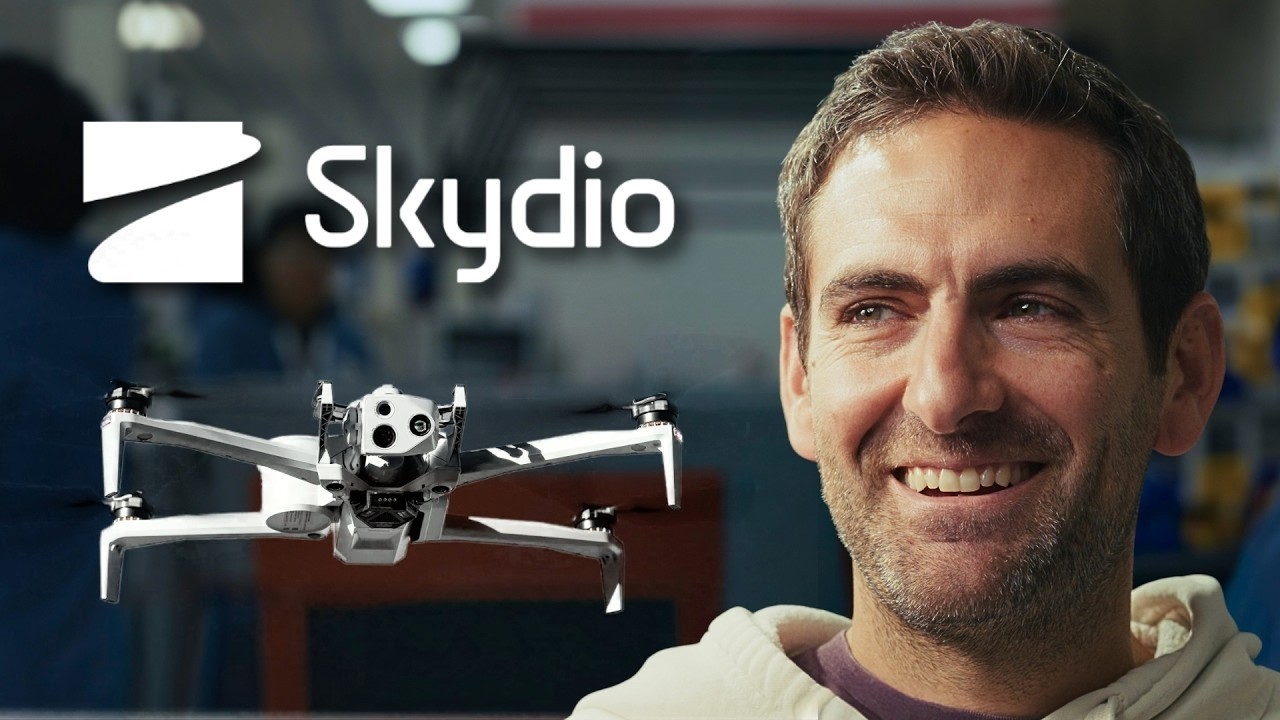
Outcompeting DJI | Adam Bry, Skydio
Nov 8, 2026 · 59:39
Skydio CEO Adam Bry tells Ti Morse that Skydio will outsell DJI among US civilian customers this year, as the drone market shifts from manually flown aircraft to dock-based autonomous systems Skydio bet on early. He describes being sanctioned by China, which shut down a battery supplier, forcing a rebuild and spending a billion dollars with US suppliers over five years. He explains tradeoffs like the F-10 fixed wing's wingtip camera gimbal, two hours of endurance and 100 mph speed, and why battery-swapping docks fail customer data. He recounts bets on docks, public safety and rolling shutter cameras in Skydio 2, each made before any market existed. He credits a lean team half to a quarter the headcount of public comps, with factory output tripling this year and just 1% penetration.

SpaceX has no competition — Saurav Shroff, Starpath
Oct 28, 2026 · 57:58
SpaceX has no real competition and may never sell launch to anyone but itself, argues Saurav Shroff, founder and CEO of Starpath, on Relentless with Ti. He argues AI data satellites need about $5 per watt all-in and $200/kg launch — numbers only fully reusable rockets like Starship or Stoke Space's can reach — while Falcon 9 is 5x too expensive and 10x too slow. Shroff explains how Starpath cut space solar costs 50x with a paper-thin 'OLAD' built like an OLED display, and why its 130,000 sq ft factory will make 50 megawatts a year — 10x demand — ahead of a 1.2-gigawatt Austin fab because customers want capacity. He also reveals a deadline after which Starpath would build its own launch company, and how superintelligence funds a Mars city and Moon base by paying for the rockets.
Why Elon Outcompetes Everyone | Casey Handmer, Terraform Industries
Sep 30, 2026 · 1:15:19
Terraform Industries founder and CEO Casey Handmer tells host Ti that Elon Musk outcompetes because his intuition is right more often than chance, walking through his lunar Mass Driver—Moon rock shot once a second down an electromagnetic track—and Starmind, the orbital AI constellation whose tokens are 1,000 times more valuable than Starlink bits. He says Earth data centers converge on solar plus batteries, that megaprojects have become effectively illegal—fixing the subsided California Aqueduct wastes 10,000 statistical lives—and that Terrafab needs national security cover. He credits Musk with firing teams like the Starlink staff, says ~70% of productive value is taxed away, doubts 10,000 Starship flights a year within five years, and defends income inequality as lifting the floor.

How to Dominate Manufacturing in the US | Chris Power, Hadrian
Sep 21, 2026 · 1:18:49
Chris Power, Founder and CEO of Hadrian, tells host Ti Morse that scaling US manufacturing means building capacity ahead of contracts, operating with an 80% risk of death, and sprinting through one-way-door capex bets. He explains how GPU-style modular factory stations let Hadrian share 80% of capex across programs, and recounts a vendor defect that nearly killed the company until 30 engineers fixed it in four weeks. Power details growing from 725 to 1,325 employees in four months via 30-40 person modular teams, teaching venture investors his cost accounting, and building government trust by giving policy advice for 2.5 years before bidding. He argues CEOs should maximize organizational velocity over prediction and manage energy by acting on hard decisions immediately.
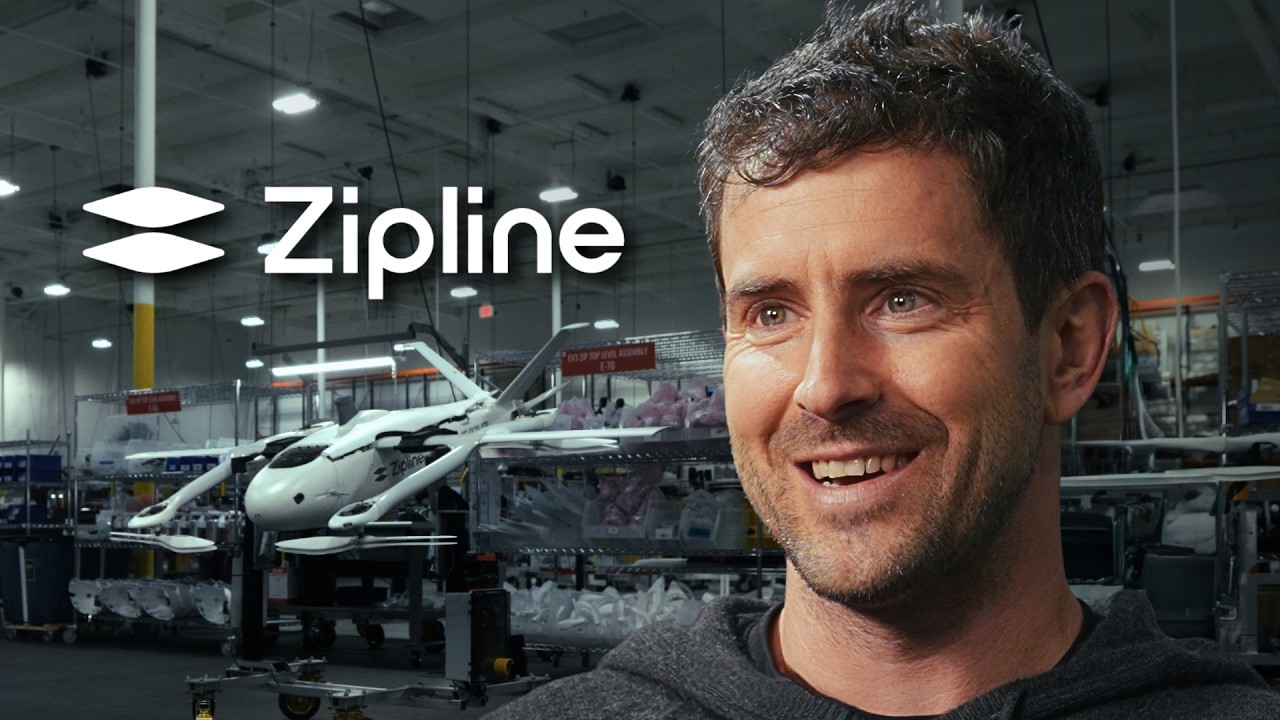
1 Million Drone Deliveries a Day by 2028 | Keller Cliffton, Zipline
Sep 14, 2026 · 41:26
Zipline Co-Founder and CEO Keller Cliffton tells Ti Morse how an Uber Eats partnership demanding 1 million drone deliveries a day within 2.5 years forced Zipline to discard its operating plan six months after setting it. He argues hardware companies are chains of 30 multiplied disciplines where one failure makes the company a zero, producing shifting existential crises from tariffs to maintenance backlogs. Because customers want 'teleportation,' not drones, Zipline is artificially constraining home sign-ups while doubling factory capacity originally sized for 20,000–40,000 aircraft a year—Cliffton needs five times that. He says 5.5 billion annual US instant deliveries could become 55 billion at observed behavior, and closes arguing robotics will 'give the Earth back to humans.'

Starting a Solid Rocket Motor Factory from Scratch | Ethan Thornton, Mach Industries
Sep 2, 2026 · 1:49:34
Ethan Thornton, founder and CEO of defense startup Mach Industries, argues that product iteration speed—not raw performance—is what wins for the West against China's manufacturing scale. He walks through scaling a solid rocket motor factory toward hundreds of thousands of units a year, the 'baking not plumbing' curing process, and vertically integrating jet engines, radars, and warheads to secure surge capacity. He explains block redesigns every three months, Capex-light/Opex-heavy economics, and function-based orgs that keep small teams moving fast. He also details killing hydrogen despite it being 100% of revenue, moving the company from Austin to LA, and lessons on leadership failure and bouncing back from mistakes.

Manufacturing 1 million drones a year | Olaf Hichwa, Neros
Aug 11, 2026 · 1:06:28
Olaf Hichwa, co-founder and CTO of drone maker Neros, says the company now builds over 1,000 Archers a week and plans to reach a 130,000-drone annual run rate by December and one million drones a year by 2028 from its new 250,000 sq ft factory. In the episode he explains why drones cause roughly 70% of casualties in Ukraine, why Neros designs for operators rather than government specs, and how Archer AI lets a drone lock onto a target and strike even after losing comms or GPS. He also details the Bandit interceptor, the decision to vertically integrate components, and lessons from a Chinese production line making 2,000 Russian kamikaze drones a day, arguing the West must rebuild its drone industrial base to maintain credible deterrence.
Sam Altman - How to Start a Startup
Jul 25, 2026 · 1:09:39
Sam Altman, CEO of OpenAI, explains how AI has transformed startup building, arguing that the exponential progress of models and the ability to do more with smaller teams make this an unprecedented time for founders. He describes trusting exponentials, operating in chaotic environments, and learning to enjoy painful experiences as key to resilience. Altman details OpenAI's mission to create abundant, cheap, and decentralized intelligence, with current bottlenecks being transistors and electrons (chips and energy). He shares stories of buying massive compute, the world tour after GPT-4 launch that visited 28 countries in 35 days, shutting down promising projects like Sora to focus on coding agents (Codex), and how he texts 300-400 people daily to maintain context. Altman contrasts real trends (deep enduring usage like ChatGPT) from fake trends (hype without sustained use) and emphasizes that the joint-stock company was a pivotal invention for incentive alignment. He also reflects on Google's failure to capitalize on their AI lead, his own undershooting on compute investments, and the importance of asking for what you want, illustrated by the kamikaze mission that made Codex beat…
Powered by PodHood